Warning Signs During Pregnancy Every Woman Should Know
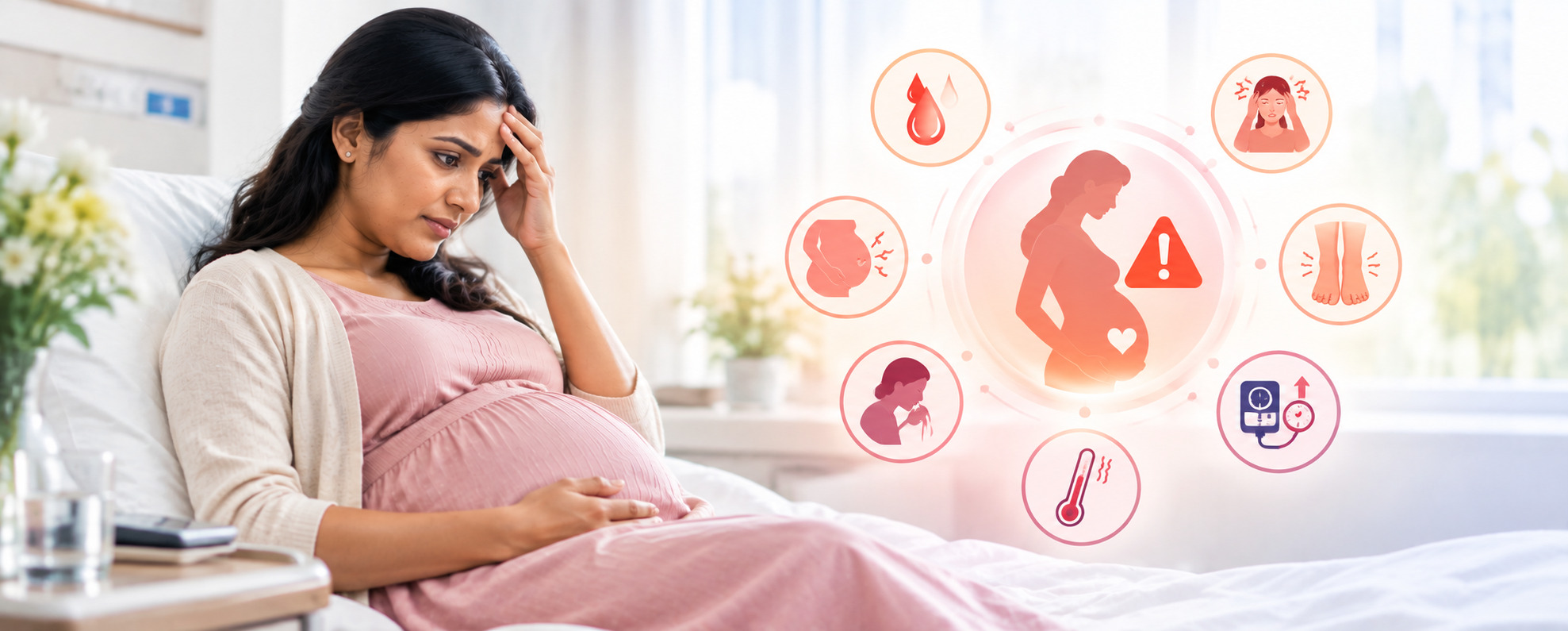
Warning Signs During Pregnancy Every Woman Should Know
Introduction
Pregnancy brings many physical changes, and some discomfort is normal. However, certain symptoms may indicate a complication and should not be ignored.
Knowing the warning signs can help you understand when to seek medical advice. If you experience a sudden, severe, or unusual symptom during pregnancy, contact your obstetrician or maternity care provider.
Vaginal Bleeding
Any vaginal bleeding during pregnancy should be reported to your doctor or midwife. Although light spotting can occur for different reasons, bleeding may sometimes indicate a problem that requires assessment.
Seek medical advice if you experience:
- Heavy vaginal bleeding
- Bleeding with abdominal pain or cramps
- Bleeding accompanied by dizziness or feeling faint
Severe Abdominal or Pelvic Pain
Mild abdominal discomfort can occur as the uterus grows during pregnancy. However, severe, persistent, or worsening pain in the abdomen or pelvis should be checked by a healthcare professional.
Seek medical attention if the pain:
- Is severe or continues to worsen
- Begins suddenly
- Occurs with vaginal bleeding
- Is accompanied by dizziness, fainting, or fever
Reduced Baby Movements
Once you begin to feel your baby's movements regularly, you will gradually become familiar with your baby's usual pattern.
A noticeable reduction or change in your baby's movements should be reported to your maternity care provider. Do not wait until your next scheduled appointment if you are concerned about reduced movements.
Severe Headache or Vision Changes
A severe or persistent headache during pregnancy should not be ignored, particularly when it occurs with other symptoms.
Contact your doctor if you experience:
- Severe or persistent headache
- Blurred vision or other changes in vision
- Sudden swelling of the face or hands
- Pain in the upper abdomen
These symptoms may sometimes be associated with high blood pressure or pre-eclampsia and require medical assessment.
Sudden or Severe Swelling
Mild swelling of the feet and ankles can occur during pregnancy, particularly as pregnancy progresses.
However, sudden or significant swelling of the face, hands, or other parts of the body should be reported to your doctor, especially if it occurs together with a headache or changes in vision.
Other Warning Signs to Watch For
Other symptoms that should be reported promptly during pregnancy include:
- Fluid leaking from the vagina
- Regular painful contractions before the expected due date
- Fever or chills
- Difficulty breathing or chest pain
- Severe vomiting that prevents you from keeping food or fluids down
- Fainting or severe dizziness
- Pain or burning when passing urine, particularly when accompanied by fever or back pain
When Should You Contact Your Doctor?
If you are unsure whether a symptom is serious, contact your obstetrician or maternity care provider rather than waiting for it to go away.
Seek urgent medical attention if you experience:
- Heavy vaginal bleeding
- Severe abdominal pain
- Difficulty breathing
- Chest pain
- Fainting
- Significantly reduced or absent baby movements
Every pregnancy is different. The appropriate response may depend on your stage of pregnancy, medical history, and individual circumstances.
Conclusion
Most pregnancy symptoms are not serious, but certain warning signs require prompt medical attention. Vaginal bleeding, severe abdominal pain, reduced baby movements, severe headaches, sudden swelling, and other unusual symptoms should not be ignored.
Regular antenatal check-ups and discussing any concerns with your obstetrician can help identify complications early and ensure that you receive appropriate care throughout your pregnancy.