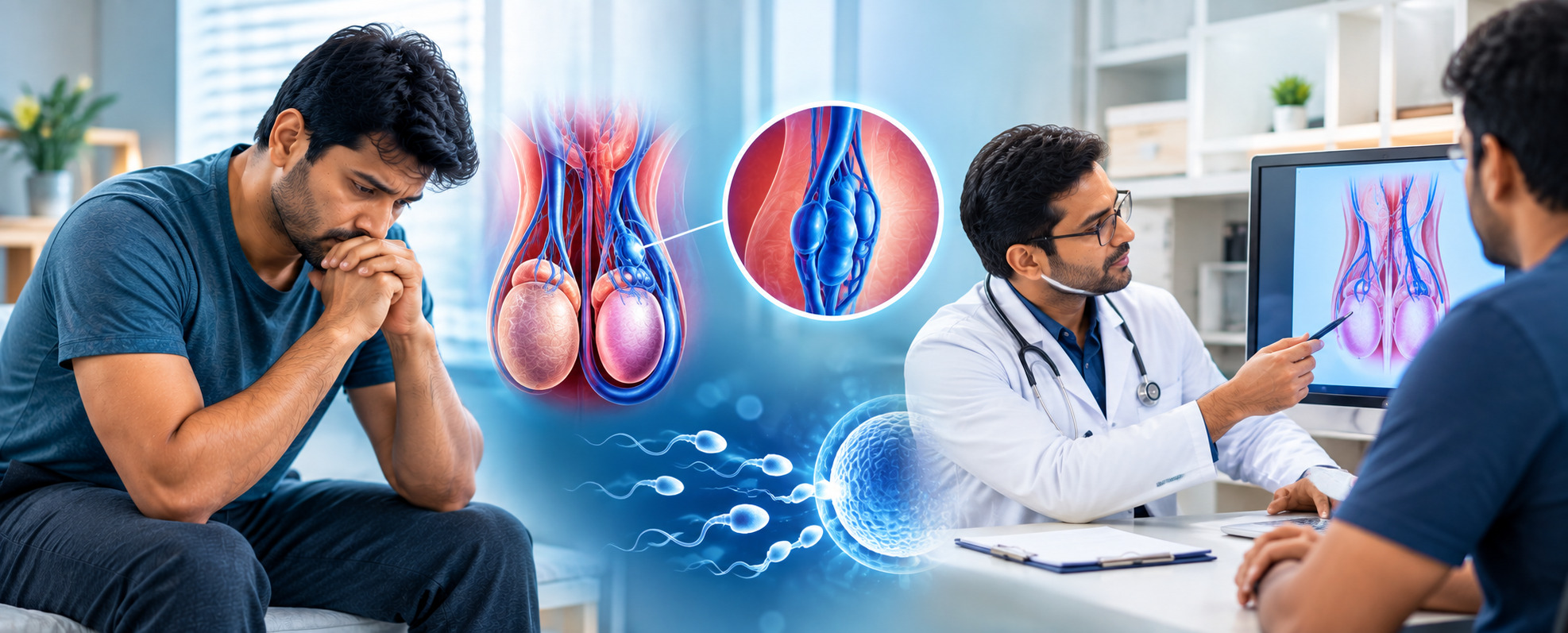
Male Fertility and Lifestyle - How Daily Habits Affect Sperm Health

Male Fertility and Lifestyle - How Daily Habits Affect Sperm Health
Introduction
Male fertility can be affected by several factors, including lifestyle and everyday habits. Smoking, excessive alcohol consumption, poor sleep, lack of physical activity and prolonged heat exposure may affect sperm production and quality.
Making healthy lifestyle changes can support sperm health. Since sperm production takes around 2–3 months, improvements may take time to become noticeable.
Reviewed by Dr. N. Karthickeyan — Urologist, Andrologist & Men's Health Specialist — 15+ years of experience
Heat Exposure
The testicles are located outside the body because sperm production works best at a temperature slightly lower than normal body temperature.
Frequent or prolonged exposure to heat may affect sperm production. Men concerned about fertility can take simple precautions such as:
- Avoiding prolonged hot baths and saunas
- Avoiding placing a laptop directly on the lap for long periods
- Taking breaks from prolonged sitting
- Avoiding unnecessary prolonged heat exposure
The effect of heat can vary between individuals.
Smoking and Sperm Health
Smoking can affect sperm count, movement and quality. The chemicals in tobacco smoke can also cause oxidative stress, which may affect sperm cells.
Stopping smoking is an important step for men who are trying to improve their fertility as well as their overall health.
Alcohol Consumption
Regular heavy alcohol consumption can affect hormone levels and sperm production.
Reducing alcohol intake or avoiding it altogether may support reproductive health. Men trying to conceive should discuss their alcohol consumption with their doctor, particularly if there are already concerns about fertility.
Sleep and Sperm Health
Poor sleep and irregular sleep patterns may affect hormonal health and overall wellbeing.
Getting enough regular sleep, maintaining a consistent sleep schedule and addressing ongoing sleep problems can support general health and may also benefit reproductive health.
Regular Physical Activity
Regular moderate exercise can help maintain a healthy weight and support cardiovascular and metabolic health, which are important for male reproductive health.
Activities such as walking, swimming, strength training and other forms of moderate exercise can be included in a regular routine.
Very intense training or activities involving prolonged heat exposure may need to be discussed with a doctor if fertility is a concern.
Healthy Diet and Weight
A balanced diet provides nutrients needed for overall health and normal sperm production. Include a variety of vegetables, fruits, whole grains, pulses, nuts, seeds, eggs and other sources of protein as part of a balanced diet.
Being significantly overweight or underweight may also affect reproductive health. Maintaining a healthy weight through a balanced diet and regular physical activity can be beneficial.
Why Three Months Matters
Sperm production is a continuous process that takes several weeks. Because of this, lifestyle changes do not usually produce immediate results.
When appropriate, a semen analysis can be used to assess sperm count, movement and other characteristics. If lifestyle changes are being made to improve fertility, your doctor may recommend reassessment after an appropriate period.
When Should You See a Specialist?
Lifestyle changes can support sperm health, but they cannot address every cause of male infertility.
A urologist or andrologist may recommend a fertility evaluation if:
- You have been trying to conceive without success
- A previous semen analysis was abnormal
- There is a history of testicular problems or surgery
- You have problems with erections or ejaculation
- You are taking medicines that may affect fertility
A semen analysis is one of the common tests used to assess male fertility.
Conclusion
Daily habits can play an important role in male reproductive health. Avoiding smoking, limiting excessive alcohol, maintaining a healthy weight, exercising regularly, getting adequate sleep and reducing unnecessary heat exposure can help support sperm health.
If you have ongoing concerns about fertility, lifestyle changes should be combined with proper medical evaluation to identify any underlying cause.