Kidney Stones: Causes, Symptoms, Treatment and Prevention
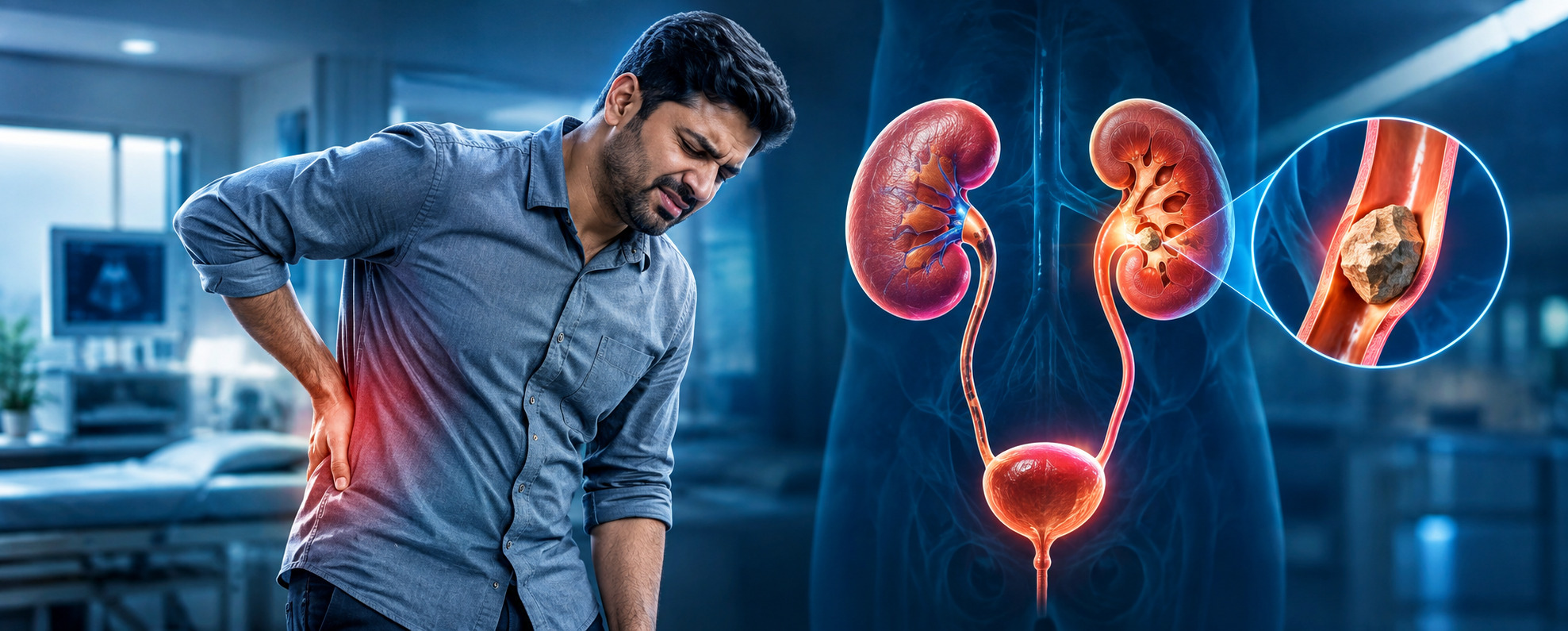
Kidney Stones: Causes, Symptoms, Treatment and Prevention
Introduction
Kidney stones are hard deposits that form inside the kidneys when certain minerals and salts in the urine become concentrated and form crystals. They can vary in size, and some may pass naturally while others may require medical treatment.
Kidney stones can cause severe pain and discomfort, but timely diagnosis and appropriate treatment can help manage the condition and reduce the risk of complications.
How Do Kidney Stones Form?
Kidney stones can develop when substances such as calcium, oxalate, uric acid or other minerals become concentrated in the urine.
Common factors that may increase the risk of kidney stones include:
- Not drinking enough fluids
- Certain dietary habits
- Family history of kidney stones
- Some medical conditions
- Previous history of kidney stones
- Certain medications
The exact cause can vary from person to person.
Common Symptoms of Kidney Stones
Small kidney stones may sometimes cause no symptoms. When a stone moves into the urinary tract, it can cause noticeable symptoms such as:
- Sharp pain in the back, side or lower abdomen
- Pain that may come and go
- Pain or burning while urinating
- Blood in the urine
- Nausea or vomiting
- Frequent or urgent urination
Fever or chills along with urinary symptoms may indicate an infection and require prompt medical attention.
How Are Kidney Stones Treated?
Kidney stone treatment depends on several factors, including the size and location of the stone, symptoms, blockage and whether an infection is present.
Treatment options may include:
Monitoring and Medication
Small stones may pass naturally through the urinary tract. Your doctor may recommend adequate fluids, pain relief and medicines when appropriate, along with follow-up to check whether the stone has passed.
Lithotripsy
Lithotripsy uses shock waves to break a kidney stone into smaller pieces that can then pass through the urinary tract. It may be considered for certain stones depending on their size and location.
RIRS
Retrograde Intrarenal Surgery (RIRS) is a minimally invasive procedure in which a small scope is passed through the urinary tract to reach and treat the stone. It may be used for stones that are unlikely to pass naturally.
PCNL
Percutaneous Nephrolithotomy (PCNL) is a minimally invasive procedure generally used for larger or more complex kidney stones. The stone is removed through a small opening made in the back.
Your urologist will recommend the appropriate treatment after evaluating your condition.
When Should You Seek Medical Attention?
You should seek medical attention if you have severe or persistent pain, blood in your urine, difficulty passing urine or symptoms that suggest a urinary infection.
Seek urgent medical care if kidney stone symptoms are accompanied by:
- Fever or chills
- Severe pain
- Persistent vomiting
- Difficulty passing urine
- Feeling very unwell
A blocked urinary tract with an infection can require urgent treatment.
How Can Kidney Stones Be Prevented?
Drinking enough fluids is one of the most important steps in reducing the risk of kidney stones.
Other preventive measures may include:
- Drinking water regularly throughout the day
- Following a balanced diet
- Limiting excessive salt intake
- Following dietary advice based on the type of stone
- Maintaining a healthy weight
- Taking prescribed medication when required
If you have had kidney stones more than once, your doctor may recommend further evaluation to identify factors contributing to their formation.
Conclusion
Kidney stones can range from small stones that pass naturally to larger stones that require procedures such as lithotripsy, RIRS or PCNL. The appropriate kidney stone treatment depends on the stone's size, location and the patient's overall condition.
Early medical evaluation can help identify the right treatment and prevent complications. If you experience severe pain, blood in the urine, fever or difficulty passing urine, consult a urologist promptly.